
Jinoos Yazdany receives Harold S. Luft Award for Mentoring
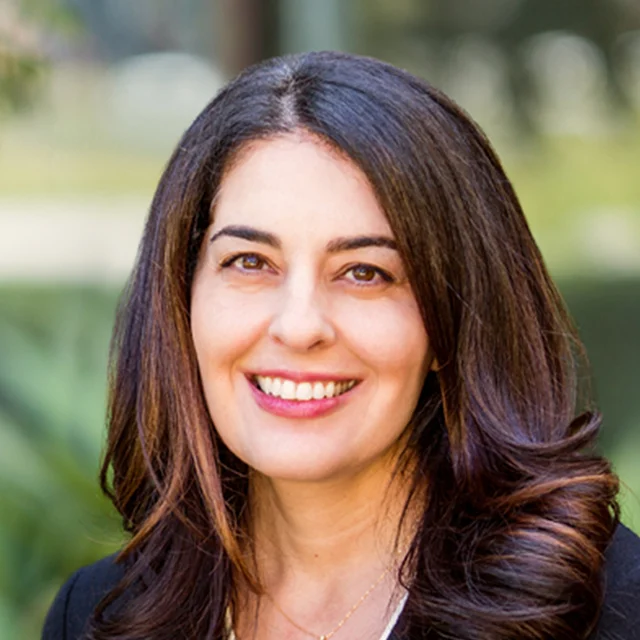 Jinoos Yazdany has been selected as the 2026 recipient of the Harold S. Luft Award for Mentoring in Health Services and Health Policy Research.
Jinoos Yazdany is a rheumatologist and a professor of medicine at ZSFG, where she serves as the chief of the Division of Rheumatology. Throughout her career, she has focused on a central question: how to improve care for patients with chronic disease. Her work brings together health services research, informatics, and implementation science to better understand what drives high-quality care in real-world settings.
Clinically, she specializes in systemic lupus and co-directs the UCSF Health Lupus Clinic. Her research has included the development and use of tools such as clinical registries and quality measures, as well as more recent work evaluating artificial intelligence to improve patient outcomes, safety, and equity. She leads the Impact Monitoring Platform for AI in Clinical Care (IMPACC), an initiative aimed at understanding how AI tools perform in practice and how they affect patients.
Yazdany has contributed to national efforts to improve quality in rheumatology, including helping to build the American College of Rheumatology’s RISE registry and advancing federal quality measures. Her work has been supported by NIH/NIAMS, AHRQ, and the CDC, and she holds a NIAMS K24 award focused on mentorship. She also co-directs the UCSF Rheumatology Quality and Informatics Lab and a research core within the UCSF PREMIER Center that supports clinical research and informatics.
She is deeply committed to mentoring trainees and early-career investigators, and to fostering a community focused on improving care for patients.
The Harold S.Luft Award for Mentoring in Health Services and Health Policy Research recognizes UCSF faculty who are engaged in the multidisciplinary field of health services and/or health policy research (HSR/HP), provide targeted mentoring in these specific areas, and in their mentoring roles, demonstrate the qualities exemplified by Dr. Luft. Health Services and Health Policy Research covers a range of topics, including how social factors, financing processes, health technologies, laws and regulations, and personal behaviors, among other factors, affect access to health care, the quality and cost of health care, and ultimately, our health and well-being. The main goals of this research are to identify the most effective ways to organize, finance, and deliver high quality care; reduce medical errors; and improve patient safety.